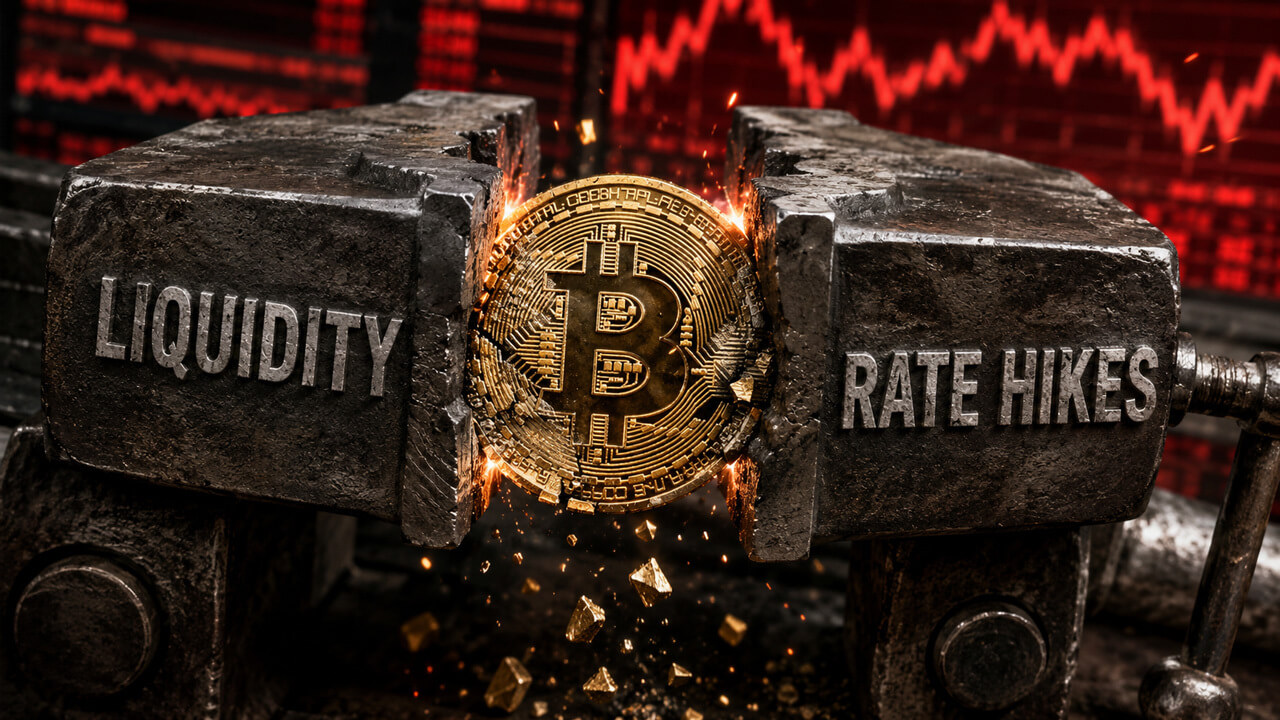



The Federal Reserve’s April meeting minutes, released Wednesday, failed to bring the good news Bitcoin traders had been hoping for most of the year. The majority of policymakers said some degree of policy tightening would likely become appropriate if inflation stayed persistently above the central bank’s 2% target, the opposite of the rate cuts markets had been counting on.
The committee held its benchmark rate steady at 3.50% to 3.75%, but four members dissented, the most divided Fed meeting since 1992, and a growing bloc wanted to strip the statement of any language suggesting cuts were on the way.
At the beginning of the year, futures traders were pricing two or more rate cuts before year-end and treating another hike as something close to impossible. By May 20, CME FedWatch was showing a 54.1% probability of a rate hike by December, with only 1.5% odds assigned to any easing. That’s a full reversal in the expected direction of monetary policy, and for Bitcoin, those two things have very different consequences.
Bitcoin trades on Fed liquidity before it trades on ideology
Bitcoin’s sensitivity to Fed policy comes down to one thing: liquidity.
When the Fed is expected to cut rates, money gets cheaper, yields fall, the dollar softens, and investors are more willing to hold risky, volatile assets (including Bitcoin). When the Fed is expected to hike, the opposite happens across all those channels at once. Bitcoin price is now almost entirely dependent on the risk appetite and liquidity conditions that Fed policy shapes. That’s why the direction of rate expectations can move BTC even when the Fed hasn’t actually done anything yet.
This shift was largely driven by the situation in Iran. The conflict pushed energy prices sharply higher, sending most inflation measures above 3%, and policymakers who had been inclined to look through supply-side shocks found themselves less willing to do so as the conflict extended.
April CPI came in at 3.8%, well above the Fed’s 2% target. Several participants in the April meeting wanted to remove the easing-bias language from the official statement. That might sound like a technical detail, but markets always see it as a meaningful signal about where policy is heading.
Incoming Chair Kevin Warsh now takes over from Jerome Powell with a committee that’s already repositioning around a more hawkish center of gravity. When markets price a more aggressive Fed, the dollar tends to strengthen because higher rates in the US make dollar-denominated assets more attractive relative to other currencies.
A stronger dollar tightens financial conditions globally and puts pressure on assets priced in dollars, which includes Bitcoin. The 10-year Treasury yield hit 4.54% on May 15, a 12-month high, making a non-yielding asset like Bitcoin a harder sell to institutional allocators who can earn close to 5% on government bonds with essentially no volatility.
The size of the ETF market only exacerbates this. Before spot Bitcoin ETFs, BTC’s macro sensitivity was somewhat buffered by crypto-native infrastructure. But now Bitcoin trades inside the same brokerage accounts as equities and bond funds, and institutional allocators can reduce exposure with the same tools they’d use to trim any other risk position. The week of May 15, Iranian escalation pushed oil above $110, drove Treasury yields to cycle highs, lifted Fed hike odds, and triggered nearly $1 billion in Bitcoin ETF outflows, snapping a six-week inflow streak. Coinbase analysts noted that a sustained expansion in Bitcoin’s price range would likely require either a clear improvement in systemic liquidity or a definitive downward trend in inflation. The minutes confirmed that neither is visible right now.
The policy win ran into a macro wall
A delayed rate cut and a potential rate hike are easy to conflate, but they describe completely different environments. A delayed cut still means the next major Fed move eventually loosens liquidity. Markets can usually price through that, and Bitcoin had found a rough equilibrium in the $76,000 to $83,000 range. A market pricing a real probability of hikes means the next big surprise could come from the tightening side, which is a harder setup for any risk asset to trade against.
The historical precedent most relevant here is the 2022 hiking cycle: as the Fed moved its benchmark rate from near zero to above 5%, and Bitcoin fell from roughly $69,000 to $15,500. The starting conditions are different now, and that specific trajectory isn’t the base case. A 25 basis-point hike is already partly priced in, so the move itself wouldn’t land as that big of a shock.
The more dangerous scenario is a sustained hawkish posture, a dot plot signaling rates elevated through 2027, or an inflation sequence that keeps giving policymakers reasons to delay any pivot.
What makes this year particularly complicated is that Bitcoin had developed a credible bull case around this year’s regulatory progress: a friendlier SEC stance, advancing stablecoin legislation, and improving institutional infrastructure.
The issue, as CryptoSlate’s macro coverage has noted throughout the year, is that you can have regulatory tailwinds and liquidity headwinds at the same time, and in the short-term, liquidity tends to win.
Bitcoin can ride the Washington narrative and still lose the rates trade. It was sitting around $77,300 on May 20, roughly 38.7% below its October 2025 ATH. The Fed minutes didn’t deliver an actual hike to damage Bitcoin’s setup. They just confirmed that the next serious policy surprise is more likely to come from the hawkish side than the dovish one.
The rate-cut trade that defined Bitcoin’s macro outlook at the beginning of the year has been replaced, for now, by something much harder to build a rally around.